
Blog / Boulevard Ford Lewes Service

Charging Your EV: Public & amp; Home Charging Options

EV Charging Options

Plug In & Charge Up: Explore Ford EV Charging Options

If you’re considering getting a Ford EV, then you’ve probably weighed your EV charging options. Unlike a conventional gas or diesel vehicle, you have plenty of options when it comes to fueling up your electric vehicle. Stay tuned for more information regarding all the fully charged possibilities available. Whether you opt for a home charging station or you’re on the go, you have your pick of where you want to recharge. Visit Boulevard Ford of Lewes to discover Rehoboth Beach, DE, EV charging stations and learn all about our Built Ford Tough® EVs!

EV Charging Types

While gas stations are pretty standard across the board, EV charging options can vary in type. Different chargers have a range of voltage needs, power outputs, and charge times. Let’s cruise through the three main categories of EV charging options!

Level 1 Charger

The first of the EV charging options includes Level 1 chargers. This involves charging your EV with a residential 120-volt AC outlet. It can take approximately 40-50 hours for your battery EV to go from empty to 80 percent charge with a Level 1 charger. For plug-in hybrid electric vehicles (PHEVs), it usually takes about 5-6 hours to charge up from 0 to 80 percent.
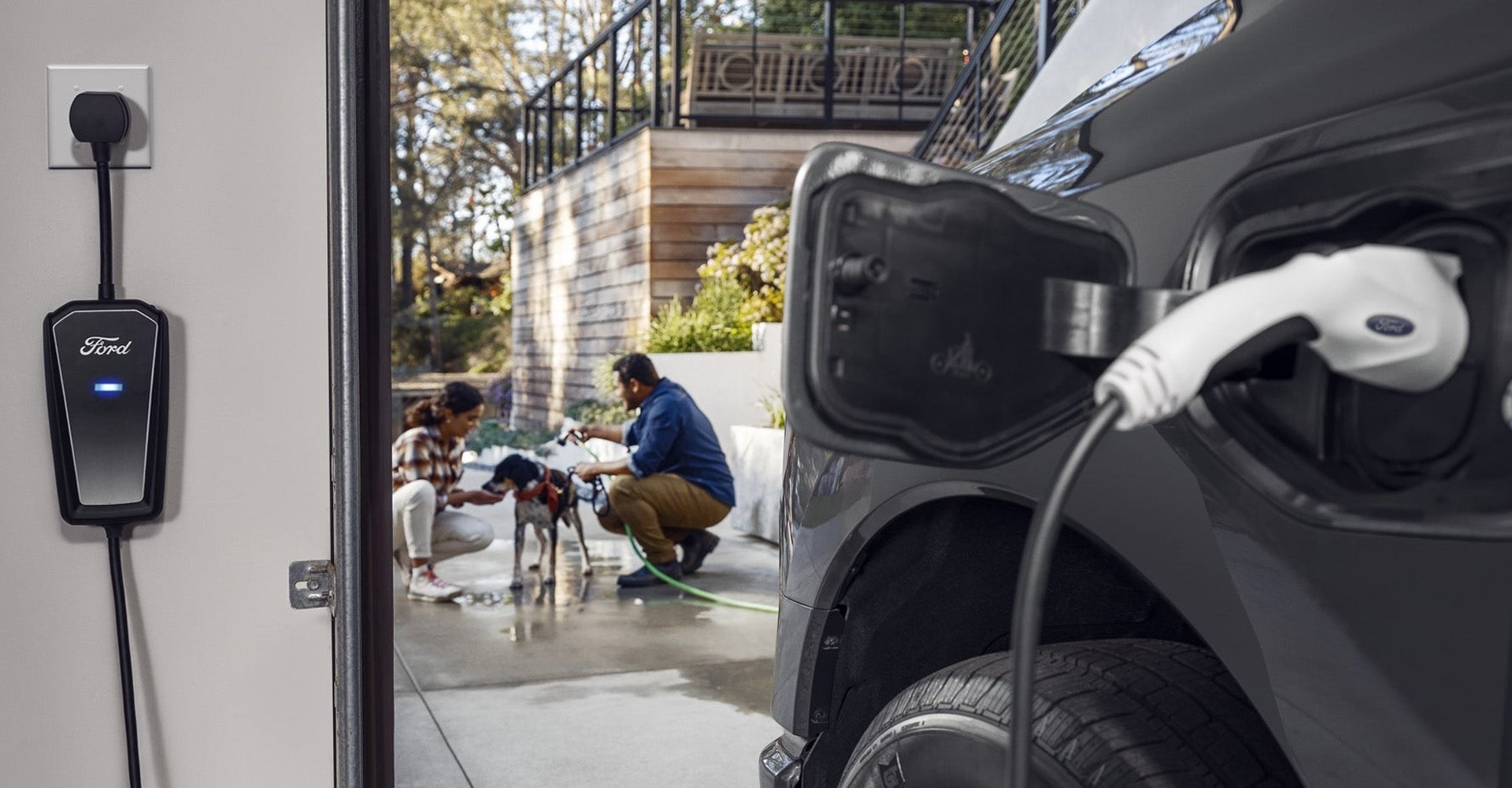
Home EV Charging

Level 2 Charger

Level 2 EV charging options are typically seen installed in homes, work buildings, or public spaces. They supply a higher charging rate with 208-240 Voltage AC, allowing your EV to charge to 80 percent in just 4-10 hours. If you charge your PHEV with a Level 2 charger, you’ll be good to go in just an hour or two.

Direct Current Fast Charging (DCFC)

If you’re on the go and need a quick pick-me-up, then Direct Current Fast Charging is the best of the EV charging options for you. These are the type of chargers you frequently see along major highways and in a variety of public places. Within 20 minutes to an hour, your EV battery will be charged to 80%, using 400-1000 Voltage DC. The typical power output of the DCFC chargers ranges from 50-350 kW. While it charges battery EVs rapidly, DCFC chargers do not work on most PHEVs. It accepts the following connector types: CCS Connectors, CHAdeMO connectors, and Tesla connectors. You can now reserve a free Fast Charging Adapter, if your vehicle is a model from 2021 to 2024 and you're enrolled in the BlueOval Charge Network™. This adapter will allow you to charge your car at DC fast chargers that use the North American Charging Standard (NACS), including over 15,300 Tesla Superchargers in the United States and Canada. Reserve your adapter by June 30, 2024, to take advantage of this free offer.

Charge On the Go

If you have a Ford EV, you can locate charging stations nearby. The BlueOval Charge Network provides over a hundred thousand charging stations in North America, so you’re sure to find one to use as an EV charging option.

Ford EV Charging Options

Home EV Charging

One of the best EV charging options is about as local as you can get. Having an EV home charging station is extremely convenient and makes your commute ultra-efficient, allowing you to charge your electric vehicle overnight or while you’re relaxing on home base. Opt for a Ford Charge Station Pro Level 2, one of our highly recommended EV charging options for the Ford F-150 Lightning. The Ford Charge Station Pro Level 2 home install charger comes equipped with up to 80 amps of on-demand power, Bluetooth®, and Wi-Fi capabilities, and it is compatible only with the Ford F-150 Lightning. Other options include the Ford For the Ford F-150 Lightning Standard-Range Battery, which takes 10 hours to charge from 15-100 percent, and the E-Transit can charge from 0 to 100 percent in 8 hours.

Find Your Ford EV

Now that you’re aware of the variety of EV charging options available, it’s time to find a Built Ford Tough® EV to suit your lifestyle perfectly. Visit our dealership to explore your charged-up choices and take a test drive today!


SHOP NOW

Posted in:

Related Posts

Ford Bronco Cost of Ownership

Ford Bronco Cost of Ownership

Understanding Ford Bronco Expenses: What You Need to Know Before Buying The Ford Bronco has always been a fan favorite among off-road enthusiasts and everyday drivers alike. Known for its rugged capabilities, stylish design, and impressive performance, the Ford Bronco is an appealing choice for those seeking adventure and durability. However, before purchasing one, it’s important to understand the costs associated with owning a Ford Bronco, from the initial price tag to ongoing expenses such as insurance, maintenance, and depreciation. Keep reading to learn more about the Ford Bronco cost, and head to Boulevard Ford of Lewes to take a test drive! Ford Bronco Purchase and Ownership Costs The Ford Bronco cost varies depending on the model, year, and trim level. As of 2024, the price range for a new Ford Bronco falls between $41,000 and $91,000. Beyond the purchase price, prospective owners must consider additional costs such as insurance, maintenance, and fuel. The estimated five-year cost to own a Ford Bronco ranges from $52,000 to $60,000. Do Ford Broncos Hold Their Value? One of the key advantages of owning a Ford Bronco is its strong resale value. Thanks to its popularity, durability, and low depreciation rate, the Ford Bronco holds its value better than many other vehicles in its class. Its rugged design and off-road capabilities also contribute to its appeal, making it a sought-after option for outdoor enthusiasts. The Ford Bronco depreciation value is averaged to be about 47% after five years. This leaves it with an estimated Ford Bronco resale value of $32,894, making the Ford Bronco a solid choice for buyers concerned with long-term investment. Ford Bronco Maintenance Cost Routine maintenance is essential for keeping a Ford Bronco running smoothly. Over five years, owners can expect to spend around $3,000 to $5,000 on maintenance. Regular service appointments, including oil changes, tire rotations, and brake inspections, help ensure the vehicle’s longevity and performance. Ford Bronco Financing Rates For buyers looking to finance their purchase, exploring Ford Bronco financing rates is important. Getting pre-approved by filling out an online financing application can streamline the purchasing process. An online payment calculator can also help determine your Ford Bronco monthly payments based on interest rates and loan terms. Ford Bronco Insurance Cost Insurance is another factor to consider when budgeting for a Ford Bronco. Over five years, insurance costs typically range from $4,000 to $5,000, though this can vary based on factors such as the driver’s history, location, and chosen coverage levels. Making a Smart Ford Bronco Purchase Decision Understanding the total cost of ownership is crucial for making an informed decision about purchasing a Ford Bronco. Considering the Ford Bronco’s strong resale value can help ensure a good investment while researching the market value of different models and years can help buyers find the best deal. Knowing the depreciation rate aids in planning for long-term costs, and comparing the benefits of buying new versus used helps determine the best financial option. Additionally, factoring in ongoing Ford Bronco costs such as insurance, maintenance, and fuel provides a clearer picture of affordability. If you’re ready to experience the Ford Bronco firsthand, visit Boulevard Ford of Lewes to explore available models and take a test drive today! SHOP NOW

Do Hybrids Really Save Money

How Hybrid Cars Help Save You Money

Do Hybrids Really Save Money? Separating Fact from Fiction Thinking about switching to a hybrid car but unsure if the financial benefits outweigh the initial cost? You’re not alone. Many drivers wonder if the hybrid vehicle cost is justified by the long-term savings. At Boulevard Ford of Lewes, we’re here to clear the air and show you how hybrids can be a smart financial decision. Hybrid Vehicle Costs: How Much Money Do You Save With A Hybrid? If you’re wondering: Do hybrids really save money? Different hybrid models offer varying levels of cost-effectiveness and resale value, making it important to choose the right one for your needs. Hybrid cars typically have a higher initial price tag compared to conventional gasoline vehicles. The average difference can be around $1,300. However, this is just one piece of the puzzle. Owning a hybrid saves you money in the long run. Read how below! Incentives and Perks: Making Hybrids More Affordable Federal and state governments often offer incentives to encourage people to switch to hybrids. These incentives can significantly reduce the upfront cost. Federal Tax Credits: New hybrid purchases may qualify for federal tax credits ranging from $250 to $3,400. Plug-in Electric Vehicle Credit: Depending on the battery capacity, owning plug-in hybrid vehicles can net you a tax credit of $2,500 to $7,500. State and Local Incentives: Many states and cities offer their own incentives, including tax breaks and access to HOV lanes. Fuel Efficiency and Maintenance: Where Hybrids Truly Shine This is where hybrids excel. Hybrids achieve significantly better gas mileage than conventional cars, often ranging from 20% to 35% higher efficiency. This translates to substantial savings at the pump, especially when gas prices fluctuate. In the end, does a hybrid car save money? Yes! Additionally, hybrids tend to hold their value better than gasoline cars thanks to their fuel efficiency and eco-friendly technology. You can use a service like Kelley Blue Book to compare resale values for specific models you’re interested in. Another often overlooked benefit is brake pad wear. Hybrids utilize regenerative braking technology that captures energy during braking, reducing wear and tear on the brake pads. This can lead to significant savings on brake replacements over time. Long-Term Savings and Resale Value: The True Advantage If you’re wondering if hybrids really save money, we have great news. Hybrids provide a reliable and cost-effective option for drivers who value fuel efficiency and long-term savings. While the initial purchase price might be higher, the fuel savings, lower maintenance costs, and strong resale value add up over time. Debunking Common Myths about Hybrid Batteries There are many misconceptions about hybrid cars. In order to answer the question: Do hybrids really save money? Let’s address a few: Myth: Hybrids are just for eco-conscious drivers. Fact: Hybrids offer a practical and economical option for drivers who want to save money on gas and enjoy lower emissions. They can also be a great choice for active families on the go! Myth: Hybrids are more expensive to maintain. Fact: Hybrids’ maintenance costs are comparable to those of conventional cars, and they have the added benefit of longer-lasting brake pads. Choosing the Right Vehicle Now that we’ve answered the question: Do hybrids really save money? We can dive into your hybrid options from Ford. Here are some factors to consider: Your Driving Habits: If you frequently take long road trips, a hybrid offers the convenience of a gas engine for extended journeys. Financial Situation: Federal and state incentives can make hybrids very attractive options financially. Your Preferences: Do you prioritize fuel efficiency, lower emissions, or access to HOV lanes? We have a great selection of hybrids, including the fuel-efficient Ford Maverick, the versatile Ford Escape Plug-in Hybrid, and the hefty Ford F-150 with the PowerBoost™ Hybrid V6 engine. The Bottom Line on Hybrid Fuel Savings Do hybrids really save money? While hybrids may have a higher upfront cost, the long-term savings on fuel, maintenance, and potential resale value make them a smart financial choice for many drivers. Pure electric vehicles also offer significant financial savings and incentives, making them an attractive option for many drivers. Our team can’t wait to help you navigate the incentives, compare models, and determine if a hybrid car is the right fit for your budget and driving needs. Visit Boulevard Ford of Lewes today and test drive a hybrid to experience the savings and performance for yourself! SHOP NOW

Ford F-150 Truck Engines

Ford F-150 Truck Engines: What’s Best For You?

Top Ford F-150 Truck Engines: Specs, Horsepower, and Towing Capacity The Ford F-150 has long been synonymous with capability and strength. It's the truck that gets the job done, no matter how demanding, and is widely regarded as America’s Favorite Truck. But beneath the rugged exterior lies a heart of innovation with several Ford F-150 truck engines to choose from, offering a range of powertrain options to match your needs perfectly. Whether you prioritize raw power, towing capacity, or fuel efficiency, there's a Ford F-150 truck engine waiting to be unleashed. Cruise along as we uncover the best Ford F-150 engine options, and head to Boulevard Ford of Lewes to find the truck of your dreams today! Ford F-150 Torque & Horsepower: Numbers that Speak for Themselves The 2024 Ford F-150's truck engines cater to various power requirements. Let's delve into the specifics: 2.7L EcoBoost® V6: This base engine delivers a solid 325 horsepower and 400 lb.-ft. of torque, making it ideal for everyday driving and light-duty hauling. 3.5L EcoBoost® V6: The Ford F-150 3.5L Twin-Turbo EcoBoost® V6’s 400 horsepower and staggering 500 lb.-ft. of torque provides ample power for tackling tougher jobs and towing heavy loads. We dive deeper into this innovative engine below! 5.0L Ti-VCT V8: For those who demand pure muscle, the 5.0L V8 boasts 400 horsepower and 410 lb.-ft. of torque, making it a true powerhouse. 3.5L PowerBoost® Full Hybrid V6: This modern hybrid system produces a combined output of 430 horsepower and a best-in-class 570 lb.-ft. of torque, proving that power and efficiency can coexist. Speak with our team to learn more about the Ford F-150 PowerBoost® specs, including its massive 11,200 lbs. of maximum towing capacity it is able to churn out. High-Output 3.5L EcoBoost® V6: This top-of-the-line engine cranks out a phenomenal 450 horsepower and 510 lb.-ft. of torque, ideal for heavy-duty hauling and conquering challenging terrain. 5.2L Supercharged V8: This limited-edition engine is a force to be reckoned with, producing a monstrous 720 horsepower and a jaw-dropping 640 lb.-ft. of torque. Unleash the Power Within: A Look at the 2024 Ford F-150 Engine Options The 2024 Ford F-150 breaks the mold when it comes to engine diversity. With a whopping six Ford F-150 truck engines to choose from, you're no longer limited to a one-size-fits-all approach. This extensive selection of Ford F-150 truck engines empowers you to tailor your performance to specific needs, ensuring you get the right amount of muscle for the job. One of the most exciting additions to the Ford F-150 truck engines lineup is the introduction of the 3.5L PowerBoost® Full Hybrid V6. This groundbreaking powertrain seamlessly blends a powerful V6 engine with an electric motor, delivering impressive fuel efficiency without sacrificing capability. This innovation is perfect for those seeking a balance between power and responsible fuel consumption. Fuel Economy and Efficiency: Finding the Right Balance Speaking of fuel efficiency, let’s take a closer look at the most eco-friendly Ford F-150 truck engines. Fuel efficiency is a major consideration for truck owners. Luckily, the Ford F-150 engines offer a range of options to meet your needs. The 2.7L EcoBoost® V6 and the 3.5L PowerBoost® Full Hybrid V6 excel in fuel economy, delivering impressive MPG figures that make them ideal for everyday driving and budget-conscious buyers. On the other hand, the powerful V8 Ford F-150 truck engines prioritize raw power over fuel efficiency but still manages respectable highway mileage. A Closer Look: Ford F-150 3.5L EcoBoost® Specs Let’s dive deeper into one of the available Ford F-150 truck engine options, starting off with the Ford F-150 3.5L EcoBoost®. The impressive Ford F-150 3.5L EcoBoost®  goes a long way. But the true star of the show is its impressive amount of torque. This immense pulling power allows the 3.5L EcoBoost® to handle significant towing and hauling jobs without breaking a sweat, making it a compelling choice for those who need a truck that can truly get the job done. We’ll let the facts speak for themselves and refer to its available best-in-class tow rating, which maxes out at 13,500 lbs. Did we mention this Ford F-150 truck engine also offers a class-leading payload rating of 2,445 lbs. and includes a Ford port-fuel and direct-injection system to optimize performance? No matter what, full-throttle power is just a split second away, with zero lag thanks to the twin intercooled turbos, which deliver instantaneous gusto. Find Your Ford F-150 Ford F-150 truck engines offer an unmatched level of variety and capability. Whether you crave earth-shattering horsepower, class-leading fuel efficiency, or the perfect balance of both, there's a Ford F-150 engine waiting to be paired with your needs. Visit us today at Boulevard Ford of Lewes for a test drive and discover the perfect powertrain to unleash the full potential of your Ford F-150! SHOP NOW